
Demulsifier Dosage Optimization for Crude Oil Separation
Why more chemical does not always mean better oil-water separation, and how to optimize demulsifier dosage.
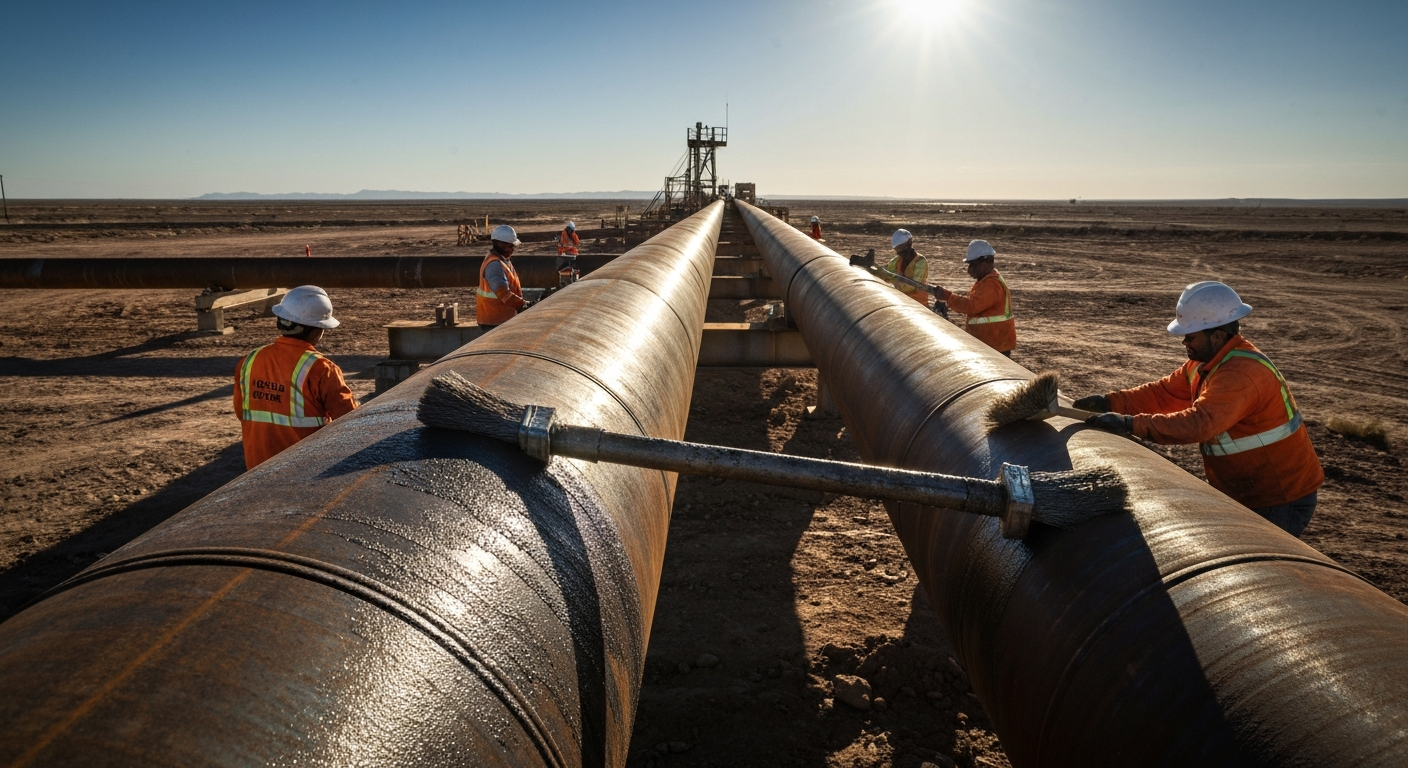
In upstream oil and gas operations, crude oil is rarely produced dry. It typically co-produces with formation water, forming tight, stable emulsions stabilized by naturally occurring surfactants like asphaltenes, resins, naphthenic acids, and fine solids. To meet stringent export specifications (typically < 0.5% BS&W - Basic Sediment and Water) and prevent downstream corrosion, these emulsions must be broken rapidly and efficiently.
Demulsifiers (emulsion breakers) are specialized surface-active chemicals injected into the production stream to destabilize the protective film around water droplets, allowing them to coalesce and settle out by gravity.
The Over-Dosing Trap: Why More Isn't Better
A common, yet costly misconception in the field is that if oil-water separation is poor, increasing the demulsifier injection rate will fix it.
Because demulsifiers are surface-active agents, they work by migrating to the oil-water interface to displace the natural emulsifiers. If you inject too much chemical, the demulsifier itself can create a new, highly stable emulsion—a phenomenon known as "overtreating." Overtreating not only wastes expensive chemicals but can also result in "pad" formation in the separator, oily water discharge, and off-spec crude.
The Optimization Protocol
Optimizing demulsifier performance requires a holistic approach balancing chemical dosage, temperature, and residence time.
1. Bottle Testing (The Foundation)
Never guess the dosage. Conduct regular "bottle tests" (shake tests) using fresh emulsion samples directly from the wellhead or manifold. This helps identify the optimal chemical base (e.g., resin alkoxylates, polyols, or sulfonates) and establishes the baseline dosage curve (typically 10 to 50 ppm).
2. Thermal Optimization
Heat is the demulsifier's best friend. Increasing the temperature reduces the viscosity of the continuous oil phase, exponentially increasing the collision rate of water droplets (Stokes' Law). A 10°C increase in the heater treater can sometimes halve the required chemical dosage.
3. Residence Time & Injection Point
Inject the demulsifier as far upstream as possible (e.g., at the wellhead or manifold) to maximize mixing energy through chokes and valves. Ensure the production separator provides sufficient residence time for the destabilized droplets to coalesce and settle.
Monitoring Success
A fully optimized demulsifier program should yield:
- Dry crude meeting export specs (< 0.5% BS&W)
- Clean separated water (< 50 ppm oil-in-water) suitable for disposal or reinjection
- A sharp, distinct interface in the separator with minimal rag layer (emulsion pad)
- Optimized chemical spend
Need High-Performance Demulsifiers?
AAA International supplies application-matched demulsifiers, reverse demulsifiers (water clarifiers), and oilfield chemicals tailored to your specific crude oil characteristics and field conditions.